
Ski jumping is a contest of courage and precision: a few seconds of flight, decided by speed on the in-run, timing at take-off and the wind on the day.
There are four Essential Phases of a Jump
1
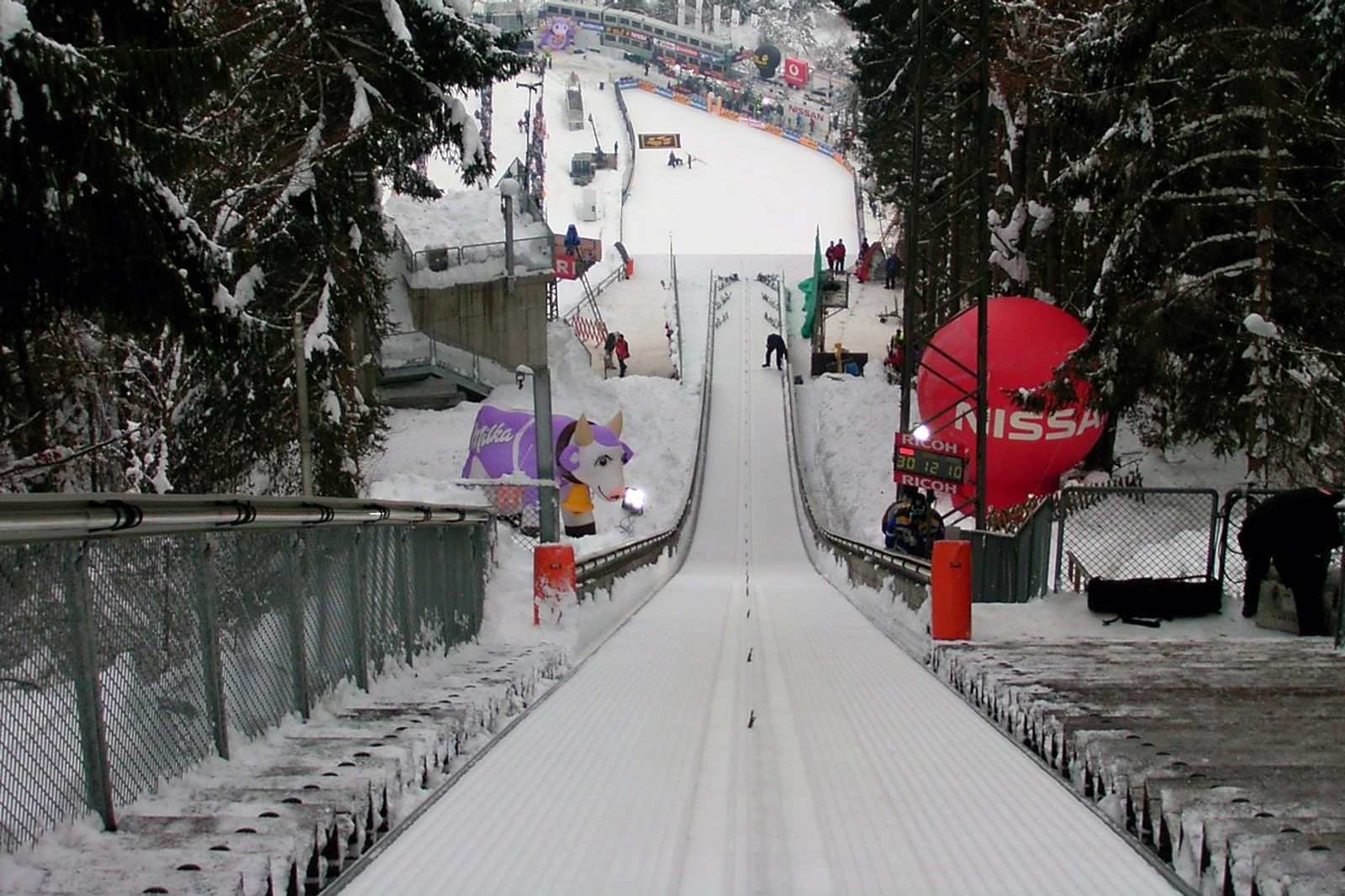
In-Run
What matters is the jumper's position, ability to keep the skis steady
2
The Jump
It must be powerful and carried out at precisely the right time.
3
The Flight Phase
This is determined primarily by flight position of the jumper and the transition between jump and flight position.
4
Landing and Finish
The jumper must land in the telemark position, one foot ahead of the other, and stay in control through the outrun.
Swiss Timing and Ski Jumping
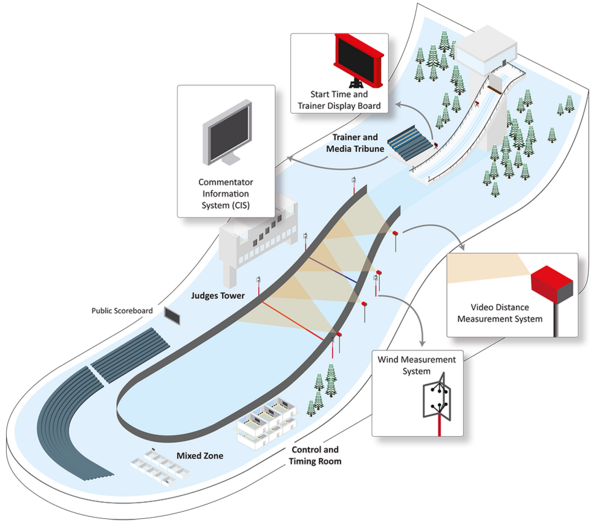
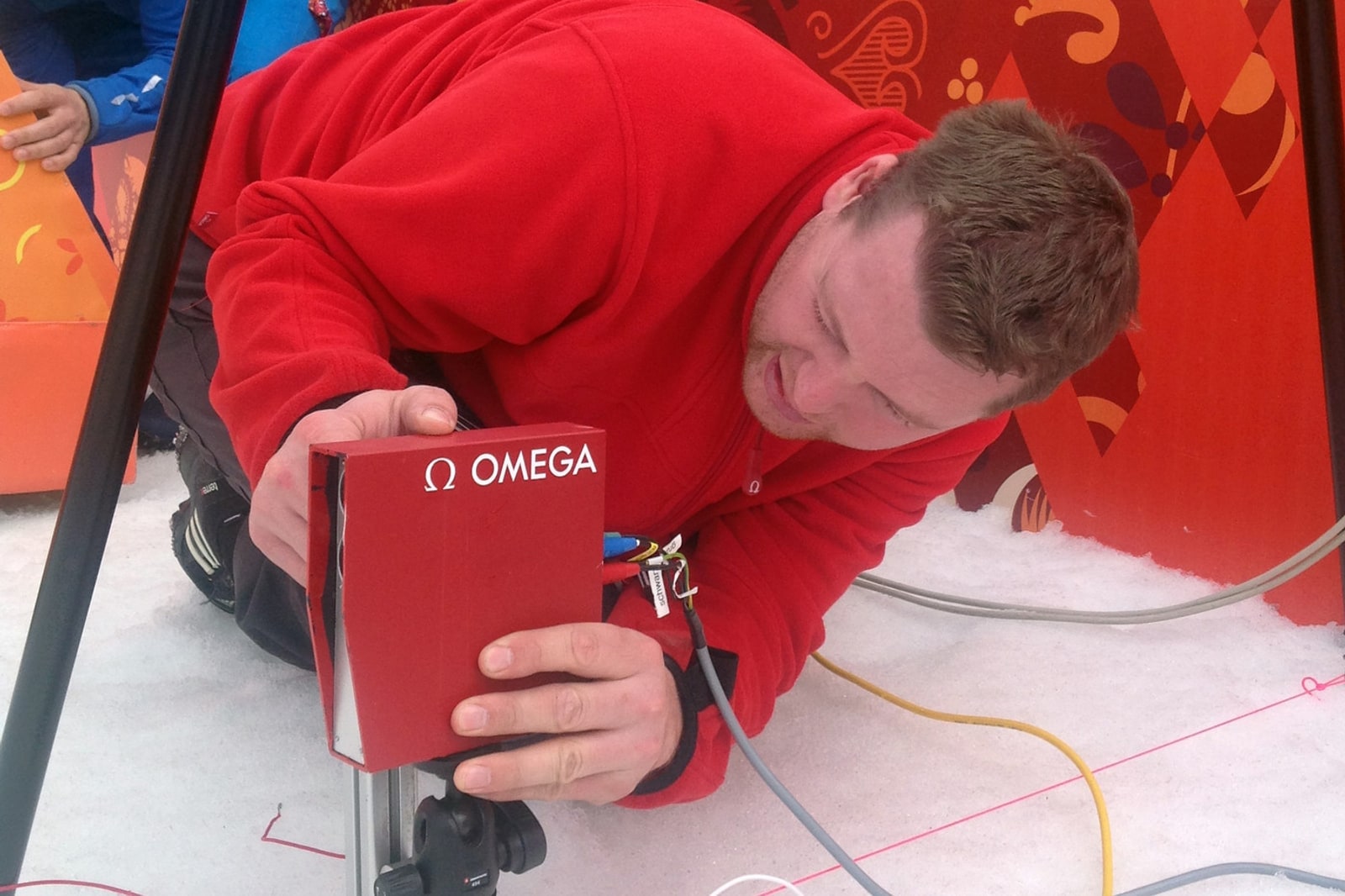
Waiting for the best wind conditions is one of the peculiarities of this sport. Swiss Timing not only measures wind speed, but also uses photocells to record athlete speed during in-run and the length of the jump. In addition, Swiss Timing uses live traditional and virtual TV graphics to identify record areas, and insert a virtual line marking the distance to beat calculated live. Judges score the flight, landing and outrun using Swiss Timing terminals.
By using our sensor technology on the skis, fascinating data about speed, jump height or ski angle are presented in real time to the athletes and the spectators.
Scope of Service
Swiss Timing uses a variety of means to communicate results. There is, of course, a wide range of reports of all results and statistics, but scoreboards also bring real time results to the public and athletes. Each TV or radio commentator has an MIS (Media Information System) screen that provides direct and permanent access to all results, and the same results are broadcast live on the Internet.
Timing
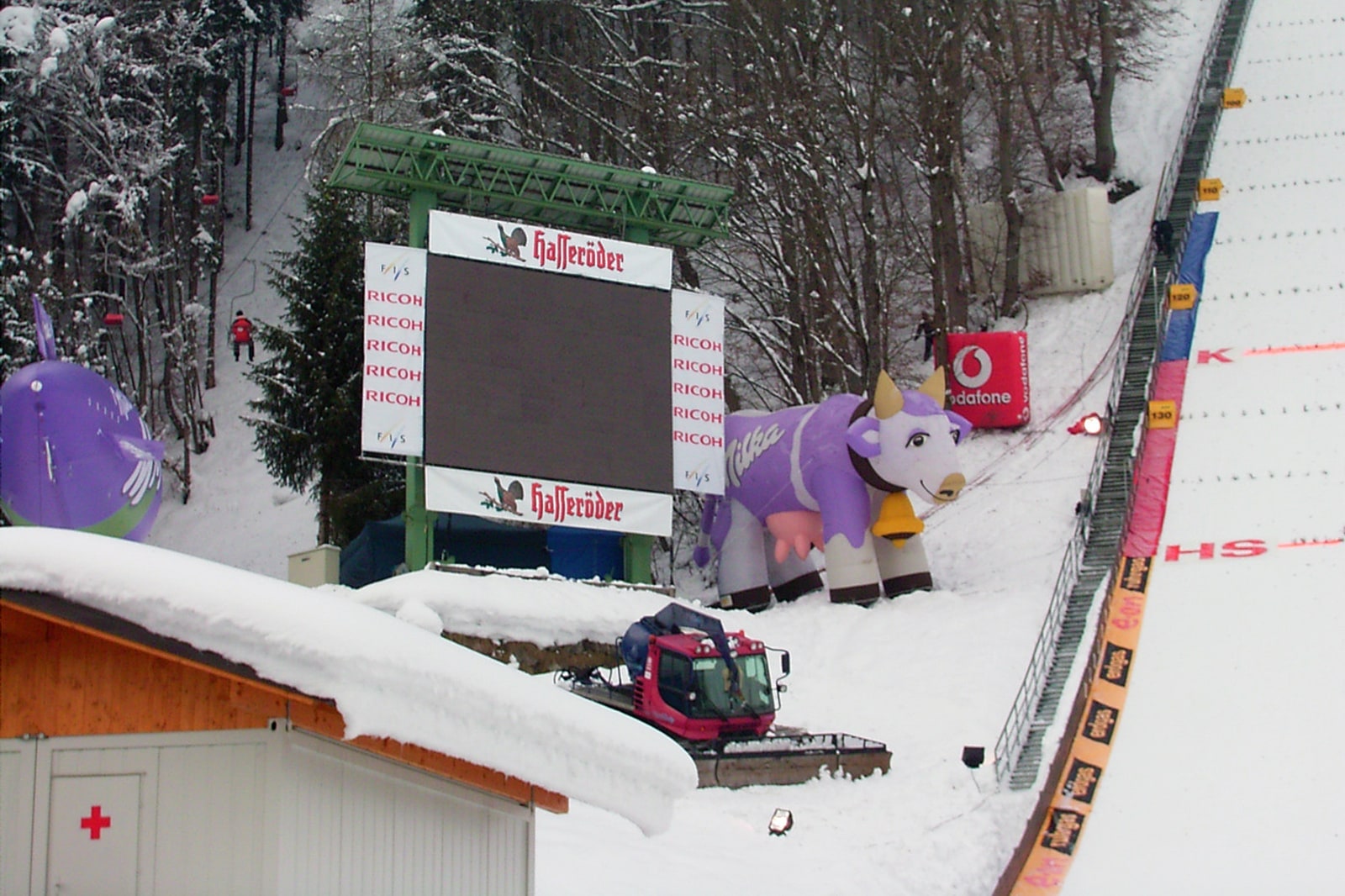
Public Scoreboards and Displays
On-Venue Results (OVR)
Commentator Information System (CIS)
TV Graphics
Virtual Graphics
Services for Ski Jumping
This drawing shows the full equipment required for top events.